
Interview with Kateryna Voychuk Ahead of Reeperbahn Festival 2024
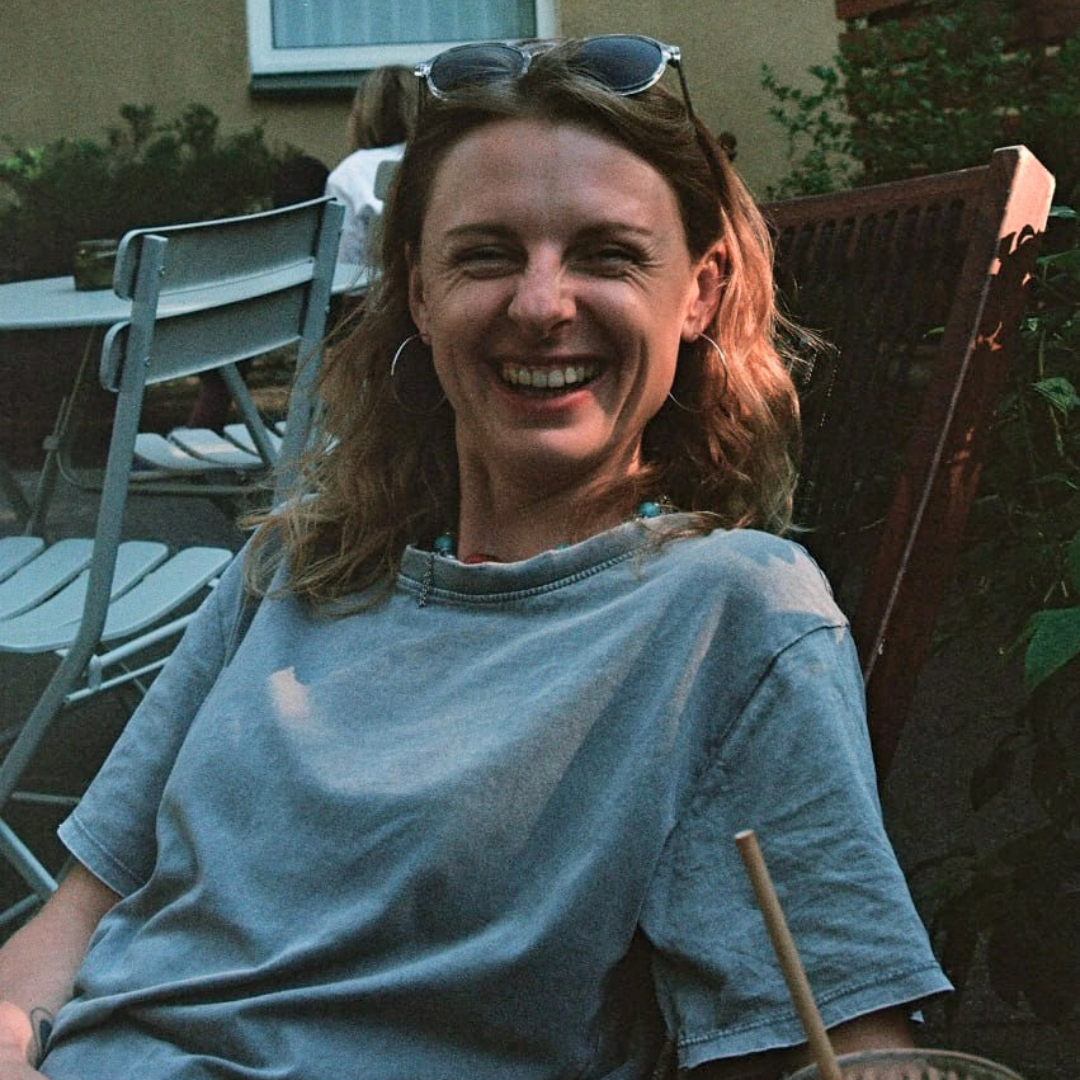
Kateryna Voychuk on Managing Tours, Shaping PR, and Navigating the Future of Ukrainian Music
In this interview, we talk with Kateryna Voychuk, the head of PR at kontrabass promo and tour manager for the band Скажи щось погане (Say Something Bad). Since starting her career in Ukraine’s evolving music scene, Kateryna has taken on multiple roles, working on artist promotion, concert organization, and large-scale communication strategies. Her work with kontrabass promo has positioned her at the forefront of music projects that not only promote local talent but also adapt to the challenges of a country in war.
Kateryna’s career goes beyond traditional artist management. She has been involved in socially conscious projects like Intercity Live and the Check-in Dnipro festival, bridging cultural and economic gaps within Ukraine. As the war reshaped the music industry, she navigated new communication challenges, offering insights on how the creative sector can still thrive.
How did your journey in the music industry begin?
My journey began with my involvement in the work of the kontrabass promo agency, but at that time, I wasn't working from the agency’s side but from the artist’s side. I was a band manager, and together with the agency, we organized a concert—the first solo performance. In business terms, I was entering the big world of the music industry from the client’s side. Back then, it was an interesting adventure for me without any serious personal ambitions or expectations for a career in the music business.
After that concert, the kontrabass promo team, represented by Yurii Bazaka, offered me the opportunity to join them and organize concerts together. Over time, there was a smooth transition from concerts to communications, which is what I’m still involved in today.
What projects are you currently working on, or have already implemented?
These are various projects, including PR for artists, concert and festival promotional support, as well as the development and implementation of communication strategies for different cultural initiatives. Currently, I’m actively working with artists like The Unsleeping, Ragapop, Pyrig i Batig, Скажи щось погане (Say something bad), and others. Among the completed projects, I’d highlight the Intercity Live festival, where I was both co-producer and communications manager, the YouTube project Zmova with live music sessions, as well as the large Check-in Dnipro festival. All of these had both a musical and an important social component.
My greatest passion is communication strategies. I enjoy diving into the essence of a project and developing a brand, shaping its image, and creating consistent communication that combines the commercial goals of the project with the creative ambitions of the artists. The way we communicate and the words we use play a crucial role, especially in times of crisis, as they can either solve a big problem or create one—whether accidentally or intentionally. I love breaking down big dreams and plans for global recognition of bands into small steps, like an Instagram post or an album presentation. These small details, like bricks, eventually form a large structure, and being part of such a construction process is a very rewarding experience.
How do you help artists identify key aspects of their creativity and personality, which are then used to create a communication strategy?
Alongside this “magic of construction,” there are concrete and proven tools, from briefing and interviews we conduct with artists to marketing analysis and monitoring of their presence in the media space. First of all, we need to understand their ambitions and goals, conduct an analysis, grasp the essence and value of the project we are promoting, and then we start building plans. Everything has a clear structure and set of instructions, even though it sometimes sounds complicated and magical.
Tell us about a project that became a great experience for you.
There have been many. Some provided great experience in crisis communication, while others had a positive impact on society or a specific part of it. The projects that excite me the most are those where you can see the results quickly. These are usually short-term initiatives with good financial backing, mostly from donors. For example, for the Check-in Dnipro festival, in just three months, we managed not only to develop and implement a communication strategy but also to see the results of the project thanks to clearly defined goals and a professional team.
When it comes to cultural projects, I am most proud of the Zmova project. We filmed live music sessions in locations that are part of cultural heritage and need protection or restoration. This was during the COVID times, and we helped raise funds for the restoration of buildings and involved young artists, for whom we shot high-quality music videos that allowed them to make a name for themselves.
The project drew attention, and despite the limited resources we invested in communication, its impact was significant. The videos are still being watched today, and the PR articles and communication materials remain examples of effective work for us. All aspects of the project were the kind that make you want to continue working in that direction.
The most difficult thing is to assess the communication effectiveness of very long-term and complex projects, like our Musicians Defend Ukraine fund, where I also manage communications. You can try different communication approaches every week or month, but the result comes only after about a year or a year and a half. However, when I hear someone mention us or say they saw our initiatives from a year ago, I realize that the efforts were not in vain.
How has the war impacted your work?
Before 2014, I worked in communications primarily in the agency field and in the digital environment. Back then, communications were bolder, more daring, and risky, while their effectiveness was easier to measure because there were fewer communication channels.
With the start of the war, communications became more cautious and thoughtful. People and brands began to carefully consider how and what to say to avoid causing offense or trauma, while aiming to provide more help and support. In terms of messages and meanings, the approach became much more sensitive.
Another significant change has been the increase in communication budgets. Now, in the second year of the full-scale war, a lot of attention is paid to communication. Previously, this wasn’t a big focus; you could just post on social media, hire an SMM manager, and that was it. Now, funds are invested in communications, and a lot of attention is given to ethical and crisis communications.
As for music, unfortunately, the budgets haven’t changed much because there isn’t much profit in this field, especially in independent music. There’s still a lot of unprofessional and inconsistent communication, and many lack a strategic approach. We are working in a not very competitive communication environment. Those who know how to communicate and succeed are the ones who achieve success. It’s easy to spot artists with a consistent, well-thought-out communication approach. Such artists achieve something significant and can secure their place for a long time. This is my biggest expectation regarding where music communications will go in the future.
I see that there are many courses on specific tools for artists, such as PR, SMM for musicians, or writing a press release, but it’s rare to see this packaged into a comprehensive story. Artists have already learned the tools, but planning for the long term — not yet. And in reality, it’s hard to fully follow a strategy, because there are too many changes in life and in the industry.
Is this specific to music communications in Ukraine, or is it a characteristic of the music industry in general, regardless of the country?
I think it's true for the music industry in general. As long as there aren't big budgets to rely on, which allow for testing different communication approaches, it's difficult to build a long-term strategy. This is almost impossible, regardless of the country.
The only difference is that here, grant and subsidy opportunities are just starting to emerge, while in other European countries, at least from what I hear from discussions with colleagues, this works better. For example, you can win a grant for a year or two to build a consistent communication strategy. We don't have that yet, and for now, when people have money, they just throw it into Instagram ads. When the money runs out, that's it – we'll just focus on making music, and promoting it will come later, somehow.
What advice would you give to artists with small budgets? What should they focus on?
Focus on learning and self-education. This is what will stay with you the longest, regardless of whether you have the money to hire a professional team. Knowledge will help you in the future to control the team's work, set tasks, understand approaches, and so on. For better or for worse, you need to have at least some knowledge about everything.
Secondly, learn how to make your creative projects commercially viable, or at least potentially profitable. Sustainability is very important and necessary, especially in creative fields. So, essentially, there are two pieces of advice: learn to communicate about yourself and learn to earn for yourself.
In your opinion, how is Ukraine's music industry currently functioning and developing?
It's intense and active. We are in a very crisis-prone environment, and there’s no sustainable development due to tragic events and stress. There's no opportunity for steady, consistent work because there are constantly factors that affect life and mood, which in turn impact creativity, and creativity affects income—without which there’s no stability. The cultural boom and the intensive development happening right now are being slowed down by external factors that can’t be ignored. Therefore, it’s important to be mindful of mental states and to be cautious—don’t rush to do everything at once, but take small steps, considering your mental health and the overall information environment.
It’s important to think about others because every message and public appearance should not only serve the goals of a music project but also consider the context in which you're working. Be mindful, check the news, keep track of what’s happening—is it appropriate to post what you planned, or should you postpone it? Great caution is needed at every step, not only in the music industry but in general. I know of two cases where music releases were postponed, and money was wasted simply because the information environment at the time wasn’t favorable. Unfortunately, we can't plan concert dates or releases, not only due to shelling and the active phase of the war but also because our mental state, as well as the state of society and the target audience, is unstable.
What should you do when you've done everything you could, monitored the information field, adjusted your messages, understand who you're communicating with, but missed something?
The key in crisis communication is to be honest. Don’t hide the truth to appear better. I’d also advise avoiding a defensive tone; instead, speak more factually and with less emotion. Crisis communication needs to be planned carefully, and it’s wise to seek advice because the risks are higher. In every instance of crisis communication I’ve had to handle, the most valuable thing that helped me was consulting with multiple parties, especially those outside my bubble or circle. This helped me understand whether I had communicated everything clearly or if people might misunderstand something that wasn’t there. Testing approaches and seeking advice is very important right now to ensure you're being heard.
What advice would you give to those just starting in your profession or the music industry in general?
Don’t try to do everything all at once, because the communication field is very prone to burnout—it demands constant engagement and a lot of resources. It's best to start by trying out different areas, getting a feel for SMM (social media marketing), seeing what’s going on in PR, learning how media works, and how successful and beloved artists build their communications. Learn, try different tools, and get practice even in various fields.
The most common mistake, especially among artists who handle their communications on their own, is to get some money—whether from a sponsor, donor, or their own earnings—and spend it recklessly, expecting results. Money is crucial, and financial promotion is often more effective than free efforts, but there's nothing worse than spending money on promotion chaotically without consulting experts. It’s better to seek advice from professionals or gain knowledge yourself, and only then spend money.
You’re going to the Reeperbahn conference and showcase festival in Hamburg this September—what are your expectations and plans there?
First of all, I want to showcase, or rather confirm, our presence: our delegation is quite large, so we need to take this chance to showcase the Ukrainian music industry from different angles. I’d also like to establish new partnerships, though from past experience, I know these are not instant results or collaborations. It’s more about building connections, following each other, observing each other’s experiences and paths, and perhaps doing something together in the future. Of course, I’m hoping to gather new impressions and inspiration. Additionally, I haven’t attended professional events abroad in a while, so I’m curious about how things are happening there now—what attention and place the Ukrainian issue holds, what narratives are prevailing, because this will influence the next steps in promoting kontrabass artists and advancing the Musicians Defend Ukraine fund internationally. In short, I want to understand the context.
How do you envision your development and the development of your projects in the near future?
I want to stay in the communication field and continue developing in this direction, as it will only grow more influential, especially with the rise of information technologies. We increasingly see that without proper communication framing, any product often doesn’t reach listeners or find its audience. At the same time, to grow personally and develop the projects I’m working on, I also want to enhance my expertise and, in general, the expertise of communicators in the music field. I’d like to help grow a community of specialists to share experiences, learn from one another, and make our profession more in-demand and prestigious, positively influencing the image of Ukrainian music both domestically and abroad.


